Customer case · StoreVector
StoreVector: The Local High Street, Online
In 2020 local shops watched their customers stay home. A webshop of their own was too expensive to build and too hard to be found. So we built them one online shopping street instead: shared, local, and with the sales insight a single shop could never afford.
A real customer project from 2020. The screens are the first design impression from the original brochure; the orders-by-hour chart is illustrative.
When the shops closed, sales went online
The pandemic pushed shopping online faster than anyone expected. Research by Colliers, reported by the AD in June 2020, found that four in ten Dutch people had bought more online, that 260,000 households had ordered groceries online for the first time, and that almost one in five shops in mid-sized cities was expected to stand empty in 2021.
For local shop owners that was not good news. The cost of building and running a webshop favours the market leaders, so many independent shops decided not to start at all. A pity, because customers wanted to support their local shops. They just could not reach them outside opening hours.
Not a webshop each, but one street together
StoreVector, WinkelVector in Dutch, turned that around. Instead of every shop building its own webshop, the shops in a shopping centre or neighbourhood share one: a local online shopping street, comparable to the big marketplaces but run for and by the shops around the corner. A customer orders from the baker, the cheese shop and the shoe shop in one go, pays online with iDEAL, and receives it all in one box, delivered by a local team or ready to pick up.
Doing it together is what makes it work:
Shared costs
A website is mostly fixed costs. Spread over many shops, each pays a fraction of what a webshop of its own would cost.
A bigger reach
Customers looking for a product from one shop come across the products of the others, and find the site more easily and trust it sooner.
Shared logistics
Orders from several shops go into one box and one route, by bike courier or electric van, which brings the delivery cost right down.
Two sides of one platform
Behind the shop window there are two environments. Shop owners get a content management environment where products, photos and descriptions are easy to add, and where their sales are visible. Customers get a clear catalogue of everything the street has to offer.
The shop owner can
- Update the shop's information
- Add, change and remove products
- See and receive incoming orders
- View sales statistics
- Answer customers' questions
The customer can
- Search and browse products and shops
- Find similar products
- Order, and pay online with iDEAL
- Follow the order status
- Ask a question about an order
- Review an order
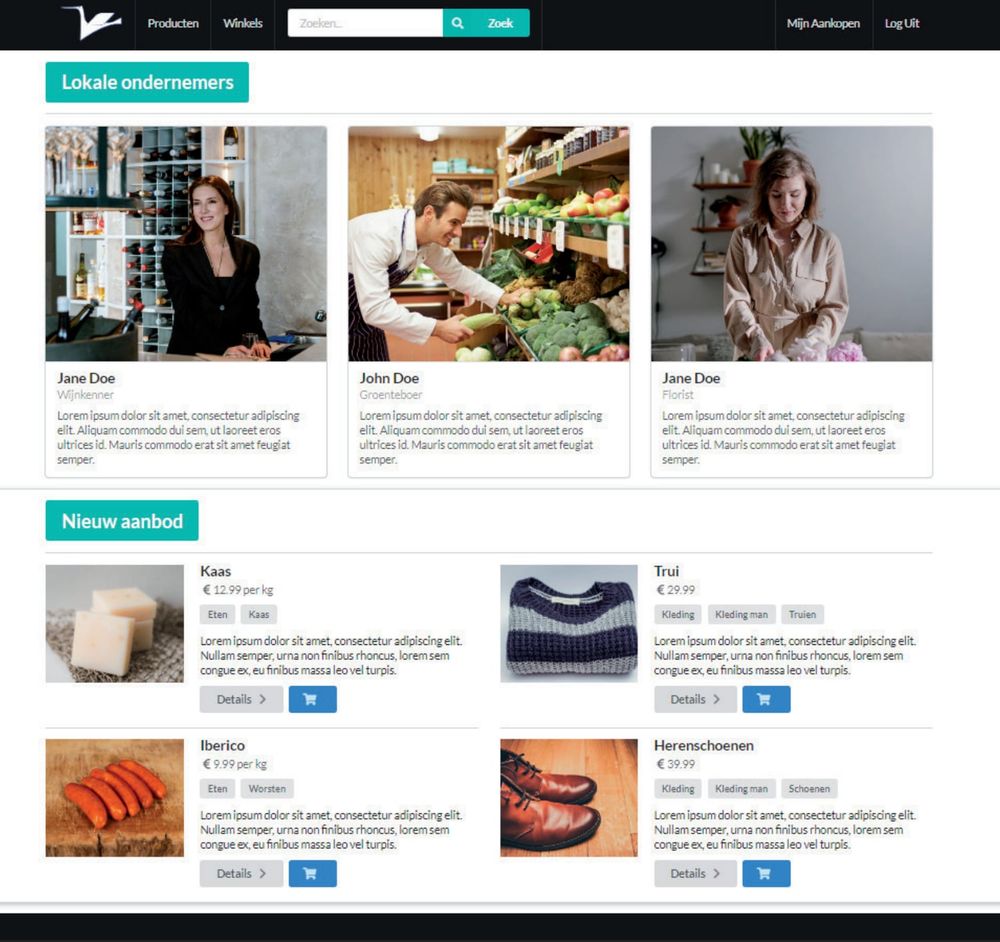
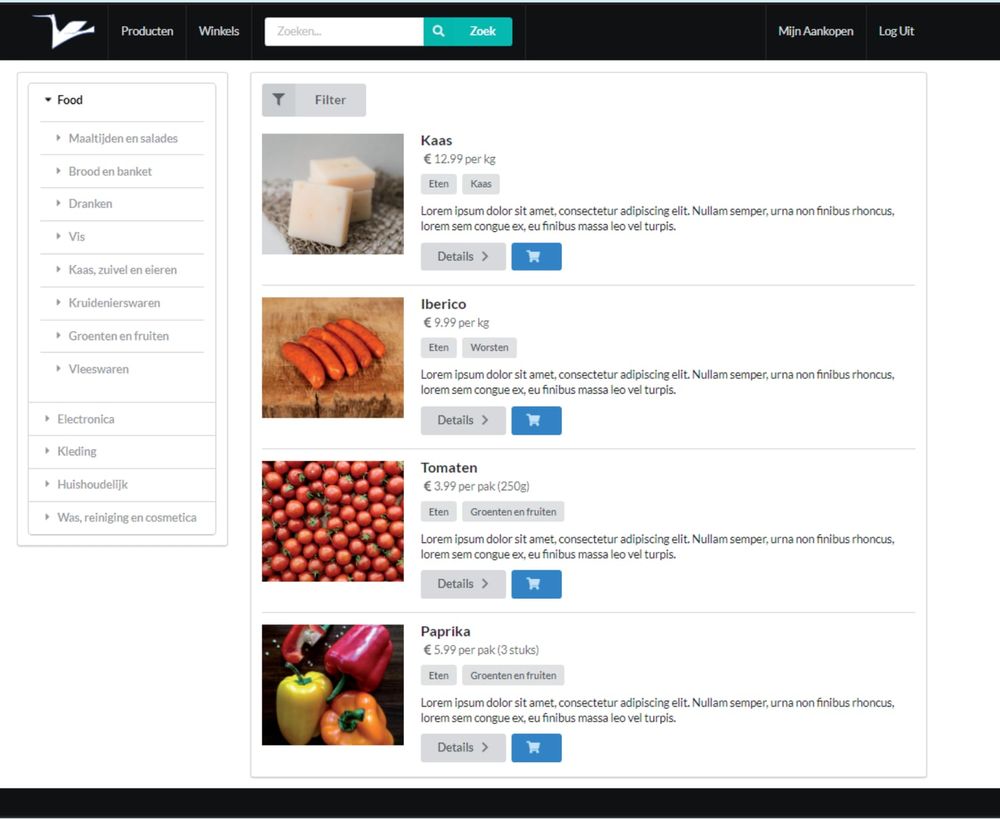
These are the first design impressions from the brochure we made for shop owners in 2020: the front page, with the local shop owners and new products, and the product catalogue.
Insight a single shop never had
Online sales leave a trail that a till does not. Every shop owner could see what sells, who buys it and when people shop, a firm basis for adjusting the range and the marketing. And the online street works with the physical shop rather than against it: customers often browse online first, and then come in.
The chart below shows the kind of pattern that becomes visible. Many orders arrive when the shop is closed: in the evening, after work, on the sofa. Those are sales a shop without an online street simply misses.
Orders through the online street, by hour of the day
Illustrative pattern- Orders during opening hours
- Orders while the shop is closed
57.4% of the orders arrive while the shop is closed.
What we built
We built a new technology stack for StoreVector, designed to scale from the start: Node.js and TypeScript on the server, React for the shop front and the owners' environment, and PostgreSQL for products, orders and transactions. It was developed in short sprints with the shop owners, so those who joined early shaped the product.
- A shared webshop for the shops in a shopping centre or area, easy to set up for each new shop.
- A content management environment for shop owners, with their sales and transactions shown in clear visuals.
- Secure from the start: hashed passwords, SSL encryption and secure iDEAL payments.
- Responsive on phone, tablet and computer, with a structure search engines can read.
- Support around it: product photography, a helpdesk, promotion through flyers and social media, and a sticker for every participating shop, together with Baasimmedia, a full-service creative studio from Nieuwerkerk aan den IJssel.
Building a platform of your own?
A platform that collects its own transaction data and turns it into insight is a small data platform in itself. We are happy to think along.